

Forced transformation
Drive from Luoyang Pangcun township road, about 3 minutes away can see nearly 5 steel furniture enterprises, 3 logistics companies and 2 steel processing plants.
In this steel forest, the competition between companies is more intense. "We have formed an industrial cluster of steel furniture here, but we have to avoid homogenized competition, and each company has to find its own best aspects." Zhao Liang suggested that enterprises should avoid homogeneous competition, find their own advantages, and actively expand different regional markets.
Driven by the wave of globalization and digitalization, traditional foreign trade enterprises are facing unprecedented challenges.
Yao Ting, deputy general manager of marketing of Luoyang Shuangbin Office Furniture Co., LTD. (referred to as "Shuangbin"), told reporters that when she joined Shuangbin in 2020, the traditional foreign trade situation was grim, and the lack of private brands and product research and development capabilities became the bottleneck of enterprise development.
Faced with this dilemma, Shuangbin chose to transform cross-border e-commerce in 2021, taking Amazon as a strategic platform to reach end consumers and corporate and institutional buyers directly, reducing intermediate links and improving profit margins. In the same year, Star City Group, which is mainly in the field of safe deposit boxes, also settled in Amazon, officially starting the road of cross-border e-commerce.
According to the relevant person in charge of Amazon enterprise purchase, in recent years, with the demand and requirements of foreign consumers are getting higher and higher, the competition is becoming more obvious, and the requirements for enterprises and products are also higher, so now the proportion of brand owners and factories in Amazon continues to increase, especially in the head sellers, the proportion of factories continues to increase.
Transforming cross-border e-commerce brings new growth opportunities for enterprises. Yao Ting mentioned that through three years of efforts, Shuangbin successfully took cross-border e-commerce as the company's strategy and achieved several times the growth of turnover.
In addition, cross-border e-commerce has built a bridge for industrial belt sellers to directly connect C-end buyers. Luoyang Kefeiya Furniture Co., LTD. (referred to as "Kefeiya") overseas business general manager Shao Jing said that no matter how the product flow, the final touch or C-end customers. Therefore, after the development of cross-border e-commerce, enterprises can omit the middleman links, and consumers can get better cost-effective products.
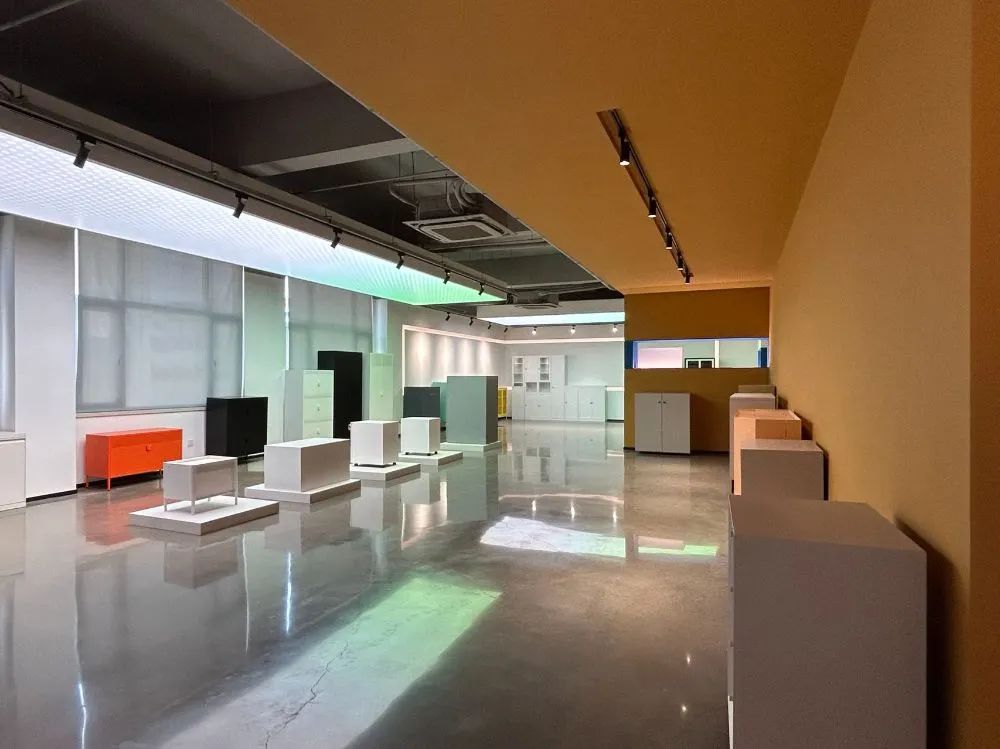
However, the transformation of cross-border e-commerce is not achieved overnight, and industrial belt sellers need to face the change of production methods and mentality. Under the cross-border e-commerce model, enterprises need to directly face end consumers, quickly respond to market changes, and optimize products.
Zhao Liang, secretary general of Zhengzhou E-commerce Association, also stressed that cross-border e-commerce provides a bridge for enterprises to go global, but enterprises need to take the road of differentiation and branding to enhance product value.
Do the automation dance
In the process of developing cross-border e-commerce in industrial belt sellers, production is the part they are best at.
However, with the increase of uncertainty in international trade, the production process needs to be upgraded and transformed. Among them, international trade has the most prominent requirements for flexible supply chains, which require sellers to be able to quickly adjust production plans to cope with fluctuations in market demand.
An industry insider told reporters that in the construction of cross-border e-commerce comprehensive pilot areas in more than 50 cities and the operation of industrial parks, most companies' supply chain systems and production line processes do not meet the requirements of flexible manufacturing and flexible supply chain.
This is more common in the traditional steel industry. When the reporter visited the Luoyang steel furniture industrial belt, it was found that the operation of many enterprises still mainly relies on manual operation, employees use chalk to count on the blackboard, manual steel plate bending, the transport path in the factory is not clear, the existence of smoke and noise is also more obvious.
If a worker wants to do a good job, he must first sharpen his tools. In order to go further and more stable in overseas markets, green intelligent manufacturing is a problem that every seller will face.
The reporter learned that Kefeiya focuses on the field of steel office furniture, and is actively creating a "digital production line" to develop in the direction of home furnishing, green, information and intelligence.
Previously, when Kfeiya participated in the Canton Fair, it often encountered problems such as the feedback of buyers to improve the quality of products. By 2013, Hu Yunliang, chairman of Kefeiya, went to Beijing to study top-level design and deeply realized that smart factories are extremely important to the future development of enterprises.
At that time, Hu Yunliang made up his mind: "Ten years of grinding a sword, I want to do smart factories." I want to influence the whole industry by doing a good job of quality starting from myself." Since then, Hu Yunliang has repeatedly traveled to Japan and Germany to learn the experience of intelligent factories.
Recalling the mental journey of the factory reform, Hu Yunliang, chairman of Kefeiya, told reporters that it was not easy and required a lot of money and time.
In addition, Hu Yunliang revealed that upgrading the factory is a slow and difficult process. In September 2022, Kefeiya purchased a lot of new equipment, but there are still nearly 30% of the equipment production rhythm is not uniform, even if the rhythm of the robot arm is fast, but the bending speed is slow, and the production efficiency can not be improved.
After the gradual replacement of old equipment and mismatched equipment, the efficiency and safety of the Kefeiya plant can be truly improved. Entering the intelligent factory of Kefeiya, the number of employees here has been relatively small, and some links have realized unmanned management. On the contrary, large orange robotic arms and conveyor belts are more common, where most of the work is done by automated machinery and intelligent systems.
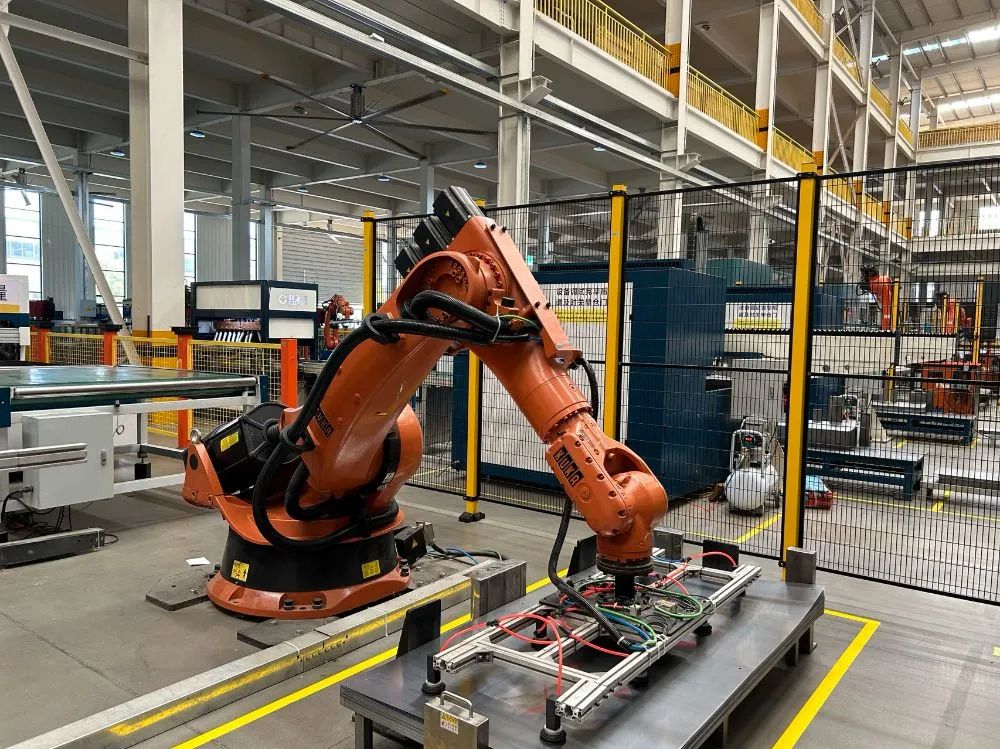
At present, Kefeiya has nine automatic production lines, covering a series of process processes such as cutting, stamping, bending, spot welding, and powder spraying, all of which are automatically completed by sophisticated machines and equipment.
At the same time, Kefeiya standardized industrial plant area of 100,000 square meters, the introduction of including Germany Trumpf laser cutting machine, Germany Kuka Kuka robot and other production equipment, in the future hope to create a real "lights out factory", that is, unmanned factory.
"If a good company goes global, it must have a strong supply chain behind it." Zhao Liang, secretary general of Zhengzhou Electronic Commerce Association, said that the trend of supply chain is first information, and the future is intelligent, and I hope that overseas enterprises can seize the opportunity of current technological progress.
Turn from OEM to own brand
For most industrial belt sellers, in traditional foreign trade, brand building is not needed, or dare not think.
"With the help of cross-border e-commerce, Shuangbin's entire enterprise dares to dream of its own brand, dares to imagine, which in the past we did not dare to think." Yao Ting said.
The reporter learned that Shuangbin is the first company to enter Amazon in Henan metal furniture industrial belt, and its products include steel activity cabinets, bedside tables, bedside tables, wardrobes, etc., which has now become the top 1 in Amazon metal office cabinet category sales.
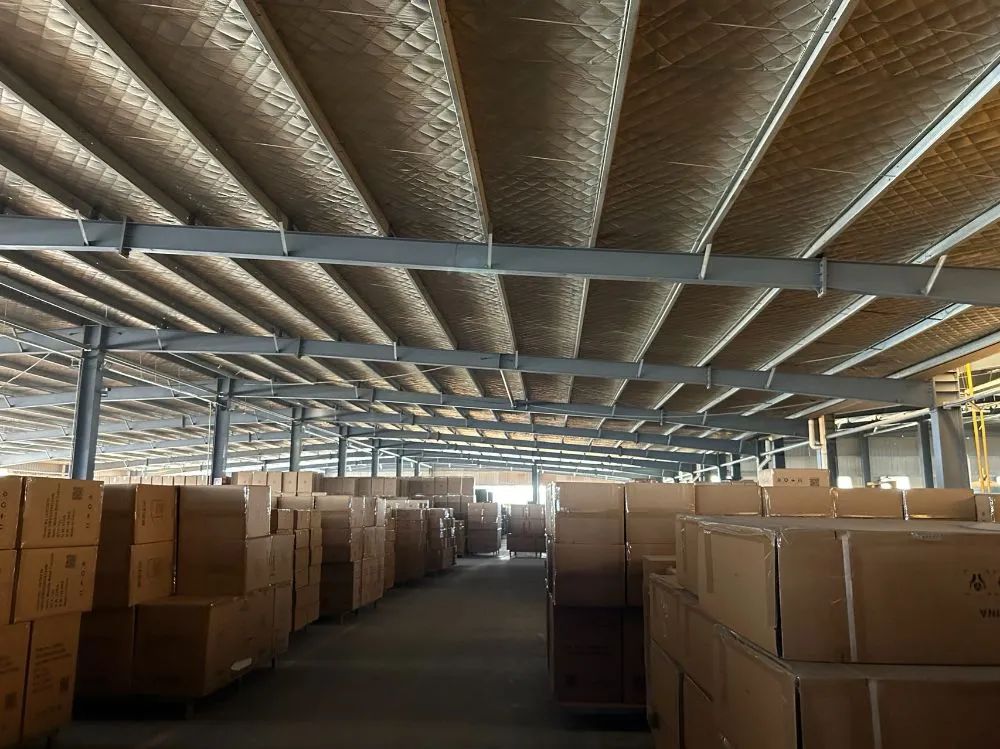
Yao Ting told reporters that the company had no feeling for marketing before, and also felt that the probability would not have its own brand. "Because we have been doing OEM for more than ten years, all of them are OEM, none of them are private brands, either neutral packaging, or hit the customer's logo."
In fact, most OEM companies do not have a brand dream, but lack the soil to build a brand. "Even if we innovate our products, we don't know who to sell them to. The customer wanted the product he wanted, not the product we wanted to sell him." Yao Ting speaks bluntly.
After the development of cross-border e-commerce, brand building has brought more imagination space for enterprises. At present, brand building is still a relatively unfamiliar part of the industrial belt sellers, but the increase of independent brands precisely represents the maturity of the industrial chain and the improvement of competitiveness.
By creating their own brands, enterprises can not only enhance their own visibility and influence, but also occupy a favorable position in the fierce market competition, and better control the design rights and bargaining rights in their hands.
At present, Shuangbin has established a professional product development and design team to achieve the integration of "production, education and research", and cooperate with well-known foreign designers, and is committed to developing products that meet the habits of consumers in different countries and have local characteristics.
In terms of new product research and development, Yao Ting said that in addition to adjusting according to category changes, the company will also develop new products according to the scene this year. "But when it comes to scenario-based development, we're a little bit more cautious, and we look at a lot of data on scenarios."
In addition, Yao Ting also stressed that before the development of new products, the company will have an estimate and arrangement for the price, cost and marketing methods, so that the product transformation can achieve such a high success rate.
At present, Shuangbin adopts a dual-brand strategy, among which Yizosh brand focuses more on C-end consumers, Letaya brand focuses more on B-end enterprise customers.
Yao Ting further revealed to reporters that the company hopes to use a combination of online and offline brand marketing in the future. Offline, the company will focus on communication with the media, offline exhibition halls, offline stores, etc. Online, the company mainly uses brand advertising, but also looks for local Kols to do some of the marketing.
"Although the two brands have only been around for two years, the actual conversion rate is very high, which gives us a lot of confidence." Yao Ting said.
A strong brand can bridge language and cultural barriers to connect different markets. "Whether it is domestic e-commerce or cross-border e-commerce, we must firmly differentiate and brand, and finally bring value." Mr Zhao concluded.
